Cotonou - Things to Do in Cotonou in April

Things to Do in Cotonou in April

April weather, activities, events & insider tips

Good time to visit Low Season · Budget Friendly

April Weather in Cotonou

Long-run averages for April

89°F (32°C) High Temp
79°F (26°C) Low Temp
5.0 inches (127 mm) Rainfall
77% Humidity
11 Sunny-Day UV
⚠ Respect the lightning. Afternoon thunderstorms hit hard over open water and exposed coastline. Cancel pirogue trips on Lake Nokoue when storms build. Stay off exposed stretches of Fidjrosse Beach. Postpone Ganvie excursions if clouds gather by mid-morning. The risk is real. ⚠ Prepare for mosquitoes. First rains trigger an increase in activity as standing water pools across low-lying parts of Cotonou. Malaria prophylaxis is strongly recommended for all travelers. DEET repellent and long sleeves after dusk are necessities. Do not treat them as optional. ⚠ Watch the roads. Low-lying routes near the lagoon and through Akpakpa and Sainte-Rita flood within minutes during heavy downpours. Skip zemidjan rides during active storms. Flooded streets and poor visibility make motorcycle travel dangerous. Build in extra time for any lagoon crossing after rain.

Making the most of April in Cotonou? Browse tours and activities in Cotonou on GetYourGuide.

Is April Right for You?

Weigh the advantages and considerations before booking

Advantages
  • + April's rains haven't reached their June peak. Storms arrive as sharp afternoon bursts that clear within the hour. The air washes clean of dry season's laterite dust. Evening walks along the Fidjrosse shoreline turn comfortable for the first time since November. Morning hours stay warm, breezy, and clear. You get a reliable window for outdoor plans.
  • + Shoulder season empties Cotonou. Winter-sun Europeans and conference travelers leave hotels from December through February. Ganvie's pirogues carry one or two visitors instead of six. Dantokpa Market operates at its own rhythm without tour groups blocking aisles. Beachfront grillades on Friday evening take minutes, not an hour. The city belongs to its people.
  • + First rains green the landscape around Lake Nokoue. Water hyacinths bloom purple across the lake surface. Palms along the Cotonou-Ouidah road turn vivid, not dust-coated. Stilt houses of Ganvie reflect in clearer water than peak wet season's turbid brown. Photography matters. This is a noticeably better visual month than January.
  • + Mango season arrives full force by mid-April. Cotonou's markets shift overnight. Vendors at Dantokpa pile Amelie and Kent mangoes in towers. Their sweetness perfumes entire aisles from two stalls away. Fresh maize grills over charcoal at every major intersection. Street food carts feature lighter preparations. Ablo steamed rice cakes with chili relish match the humidity better than heavy dry-season stews.
Considerations
  • − 32°C (89°F) heat and 77% humidity create damp, draining pressure. The worst hits between noon and 3 PM. Even Cotonois slow down. Outdoor activity without shade and water turns miserable. Unaccustomed to equatorial humidity? The first two days feel like breathing through a warm towel. Air conditioning temptation can eat half your daylight.
  • − Afternoon rains arrive. Unpaved roads in Akpakpa and Sainte-Rita turn to ankle-deep mud within twenty minutes. Zemidjan rides during downpours mean arriving soaked to the skin. Low-lying lagoon routes flood enough to become temporarily impassable. Planning around rain is possible. Flexibility matters on tight itineraries.
  • − Atlantic swells pick up as rainy season begins. Undertow along Fidjrosse and coast toward Ouidah strengthens noticeably. Swimming grows riskier than calm dry-season months. Year-round swimmers stay waist-deep. The beach remains Cotonou's best spot for food and sunset. Casual ocean swimming needs genuine caution. Skip it entirely if unsure.

Settled on April? Compare hotel prices in Cotonou for your dates on Trip.com.

Best Activities in April

Top things to do during your visit

April brings Cotonou its first serious rains. After December and January's parched months, when Harmattan dust coats everything in fine ochre, the air now carries moisture. Warm, thick, faintly tasting of laterite and green growth. Average highs sit at 32 degrees Celsius. Lows hover around 26. The heat is constant and close, wrapping around you the moment you step off a plane at Cadjehoun. Afternoon downpours come more frequently than in March, with about 127 millimetres of rain falling across the month. These are typically short, theatrical cloudbursts. They hammer the corrugated rooftops of Dantokpa Market for twenty minutes. Then they yield to pale, steaming sunshine. The city smells different after these rains. Charcoal smoke from grills along the lagoon shore mixes with wet earth and the sharp green scent of neem leaves. The streets seem louder, as if the water amplifies the call of zemidjans honking through traffic. The clatter of wooden pirogues being dragged onto the sand at Fidjrossè beach. This is a transitional month in Cotonou. A window between the dry season's relentless glare and the June deluge that will triple April's rainfall. The lagoon water is still warm enough for the stilt-village fishermen of Ganvié to work comfortably. The roads north toward Ouidah remain passable without the mud that slows travel later in the wet season. Locals move through their routines. The fish-smoking women at Jonquet turn silvery catches on wire grids over smouldering coconut husks. The tailors on Steinmetz run their pedal-powered Singers under awnings. The Vodou adepts tend shrines freshened with palm oil and kola nut offerings. For travellers, April in Cotonou has a city still navigable and energetic. Noticeably less crowded with international visitors than the peak dry months. The beaches along the Atlantic coast carry a rougher swell now. The waves crash with a low, percussive thud against the dark sand. The light turns golden and diffuse in the late afternoon. Good for the kind of slow, unplanned wandering that reveals a city's real character. Cotonou doesn't perform for tourists. It earns attention through its textures. The crumbling colonial facades of the old port quarter. The neon glow of maquis bars spilling Beninese highlife music onto unpaved side streets at night. The salty tang of fresh crab pulled from lagoon traps and grilled with piment at roadside stalls. April is the month when that texture sharpens. The rains wash the dust from everything. The city's colors look almost saturated. The acid-yellow of taxi-motos. The deep indigo of wax-print fabric drying on lines. The rust-red earth showing through cracked asphalt. Travellers who come now find Cotonou in a generous mood. Unhurried and self-possessed. Asking nothing of you but your attention.

Private Full-Day Cultural Tour in Cotonou Ganvie and Ouidah

Private Full-Day Cultural Tour in Cotonou Ganvie and Ouidah

day_trip
★ 4.4 12 reviews from $289

This tour condenses two of southern Benin's most powerful experiences into a single guided day. You begin on the waters of Lake Nokoué. The pirogue glides between the wooden stilts of Ganvié. The sound of children splashing and women pounding cassava carries across the flat, glassy surface. The second half takes you along the laterite road to Ouidah. Past the Door of No Return monument on the beach. Into the Python Temple, where the cool, musty air inside the sanctuary and the smooth weight of a sacred python draped across your shoulders make the Vodou tradition feel immediate rather than abstract.

Full day Expensive Depart by 7 a.m. to reach Lake Nokoué before the midday heat turns the open pirogue into a furnace. You'll have the softer morning light for Ganvié.
This is the only single-day route that pairs Ganvié's lake-dwelling communities with Ouidah's Vodou heartland, guided by someone who can explain the spiritual and historical weight of both sites.
Insider tip: Ask your guide to stop at the fish market on the Ganvié lakeshore before you board the pirogue. The smoked tilapia sold there, still warm and flaking apart in your hands, is some of the best you will eat in Benin. It makes a far better lunch than anything offered on the tourist boats.
This month: April's increasing cloud cover and occasional rain showers improve conditions on Lake Nokoué. The overcast sky cuts the glare off the water and keeps temperatures more tolerable during the pirogue crossing than in the harsh dry-season sun of January or February.
Electric Bike Tour EN Cotonou

Electric Bike Tour EN Cotonou

guided_experience
★ 4.9 7 reviews from $77

This tour puts you on a quiet, pedal-assisted bike. It routes you through neighborhoods that most visitors never reach on foot or by zemidjan. You roll past the crumbling warehouses of the old port district, where the smell of copra and dried fish seeps from doorways. Then you cut through residential streets in Akpakpa where the thwack of women beating fufu echoes between compound walls. The pace is slow enough to notice details. A hand-painted barbershop sign. A shrine tucked into a wall niche. The iridescent flash of a sunbird in a frangipani tree. Fast enough to cover real ground across Cotonou's sprawl.

3 to 4 hours Moderate Early morning, ideally starting by 7:30 a.m., before the heat peaks and while street life is at its most active. Bread sellers carrying trays on their heads. Kids in uniform heading to school. Fishermen hauling nets in from the beach.
An electric bike lets you cover the city's flat, spread-out geography without the brutal heat exhaustion of cycling under your own power. You stay close enough to the street to smell, hear, and feel Cotonou rather than watching it blur past a car window.
Insider tip: Wear shoes that dry quickly. April's afternoon showers can catch you mid-ride, and the puddles on unpaved streets splash up liberally. The guides know covered spots to wait out the worst of it.
Private tour of Benin 3 days (Cotonou, Lake Ganvie, Ouidah)

Private tour of Benin 3 days (Cotonou, Lake Ganvie, Ouidah)

private_tour
★ 4.5 4 reviews from $1500

This tour is designed for travellers who want the full arc of southern Benin's story, not just a highlight reel. The itinerary moves from Cotonou's urban grit. The diesel-scented chaos of Dantokpa, the largest open-air market in West Africa, where vendors hawk everything from dried herbs to motorcycle parts in a labyrinth of narrow alleys. Then to the stillness of Ganvié at dawn, when mist hangs over Lake Nokoué and the only sounds are paddle strokes and roosters crowing from stilt-house rooftops. The final day in Ouidah takes you deep into the Vodou ceremonial landscape. Past fetish markets where the acrid smell of dried animal skulls and powdered bark fills the air. Down the Route des Esclaves to the Atlantic shore.

3 days Expensive Start on a weekday to avoid the weekend crowds at Dantokpa Market, where Saturday mornings can make the already-tight aisles nearly impassable.
Three days is the minimum to understand the relationship between Cotonou's commercial energy, Ganvié's aquatic isolation, and Ouidah's spiritual gravity. Rushing it in a single day flattens each place into a photo opportunity rather than a lived experience.
Insider tip: Request that the second night be spent in Ouidah rather than returning to Cotonou. You can walk the town in the evening when the heat breaks and the sound of drums from neighborhood ceremonies drifts through the quiet streets. An atmosphere impossible to manufacture on a day trip.
Cotonou Private Tour

Cotonou Private Tour

private_tour
★ 5.0 3 reviews from $250

This tour strips the city to its essentials with a guide who knows which corners reward attention. You move through the Fondation Zinsou, one of West Africa's foremost contemporary art spaces, where the cool, air-conditioned galleries feel like a decompression chamber after the heat outside. Then you cross into neighborhoods where the guide's connections open doors. A Vodou compound where the packed-earth courtyard is swept immaculately clean and offerings of gin and red palm oil sit at the base of a clay figure. A family-run atelier where the rhythmic scraping of an artisan carving a wooden Gèlèdè mask fills a dim workshop fragrant with shea butter and sawdust.

Half day to full day Expensive Late afternoon, starting around 3 p.m., when the worst of the midday heat has passed and the golden light makes the city's textures, peeling paint, weathered concrete, bright fabric, look extraordinary.
A private guide turns Cotonou from a transit city into a destination, revealing the cultural infrastructure, art spaces, ceremonial sites, craft workshops, that exists behind the commercial surface.
Insider tip: Tell your guide you want to eat where they eat, not where tourists eat. The best street food in Cotonou is found at specific women's stalls that locals know by the cook's first name, serving pâte with a thick, fermented crab sauce that tastes tangy and savory and costs a fraction of any restaurant meal.
10-Day Tour: At the Heart of the Vodou Festival in Benin & Togo

10-Day Tour: At the Heart of the Vodou Festival in Benin & Togo

guided_experience
★ 5.0 1 reviews from $3938

This is an immersive expedition built around West Africa's most significant Vodou ceremonies, anchored in Cotonou but extending across the border into Togo's sacred sites. The itinerary is structured around ceremonial access that independent travellers cannot negotiate alone. Nighttime rituals where the pounding of drums reverberates in your chest. The sharp smell of gunpowder from ritual musket fire stings your nostrils. The dancers' feet raise clouds of red dust that coat your skin. Between ceremonies, you move through landscapes that shift from Cotonou's coastal humidity to the drier, hillier terrain of Togo's Kara region, where the cool air at elevation feels like a reprieve.

10 days Expensive The tour dates are fixed around the annual Vodou festival calendar, so timing is determined by the operator rather than personal preference.
This is one of the only guided experiences that secures genuine access to active Vodou ceremonies, not staged performances but living religious practice, with cultural interpreters who can contextualize what you are witnessing.
Insider tip: Pack a headlamp with a red filter for nighttime ceremonies. White light is intrusive and disrespectful. Red light lets you navigate without disturbing participants or photographers working in available light.
Half Day Cultural Tour of Ganvié The Venice of Africa

Half Day Cultural Tour of Ganvié The Venice of Africa

guided_experience
★ 5.0 1 reviews from $200

This tour takes you directly to the stilt village on Lake Nokoué without the broader itinerary of a full-day excursion. Ideal if your time in Cotonou is short. The pirogue ride from the Abomey-Calavi lakeshore takes roughly thirty minutes. The transition is startling. The roar of motos and truck horns fades behind you, replaced by the slap of water against wooden hulls and the creak of bamboo platforms underfoot as you step onto the floating market where women sell tomatoes, dried shrimp, and fermented locust beans from canoes. The village feels suspended between water and sky. The reflections of painted houses shimmering on the lake surface. The humid air carries a briny, vegetal smell that is entirely distinct from the ocean breeze along Cotonou's coast.

Half day Moderate Arrive at the Abomey-Calavi embarkation point by 8 a.m. to catch the morning market activity on the lake, when dozens of canoes converge and the air fills with the sounds of bartering and laughter echoing across the water.
Ganvié is the largest lake village in Africa, home to roughly 30,000 people whose entire existence, commerce, worship, schooling, cooking, takes place on or above water. A half-day visit is enough to grasp the scale and ingenuity of that life.
Insider tip: Bring a sealed plastic bag for your phone and camera. Even on days without rain, the spray from the pirogue and the humidity on the lake are relentless. The wooden boats have no dry storage.
This month: Lake Nokoué's water level begins rising in April as the rains increase, which means the pirogues can navigate more freely between Ganvié's structures than during the lower-water dry months, giving you access to more of the village.

Where to Stay in Cotonou in April

Hand-picked hotels across price tiers for April travellers.

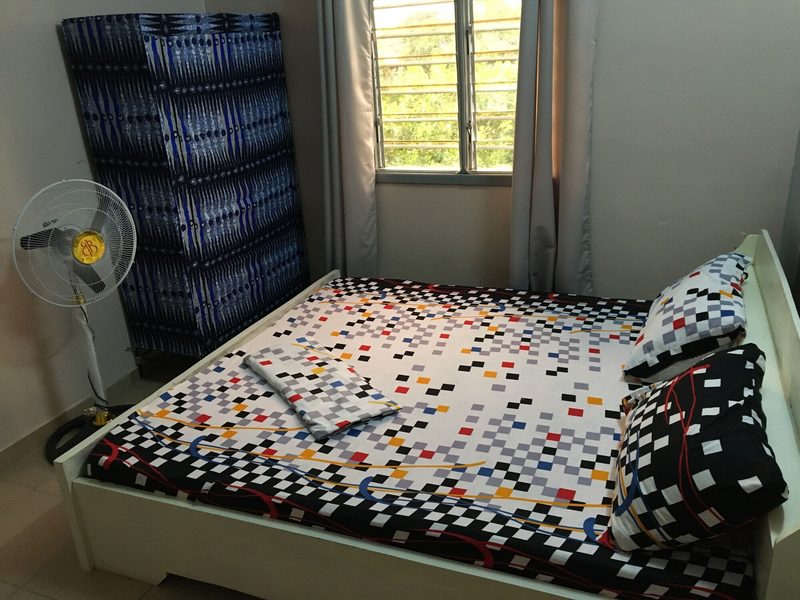
Residence MaryHouse - Free Breakfast and Taxi from Airport in Cotonou
★★★ Budget

Residence MaryHouse - Free Breakfast and Taxi from Airport

8.7 Very good · 74 reviews
From $22 / night
Check Prices on Trip.com →

Public Holidays in April

Dates that affect opening hours, transport and crowds

Easter Sunday

Observed nationwide as a public holiday.

Easter Monday

Observed nationwide as a public holiday.

Packing Checklist

Bookmark this page — your progress is saved between visits

Need the full list with shopping links?

Climate-specific gear, brand recommendations, and what to leave at home.

View Cotonou Packing List →

Essential Tips

Insider knowledge and common pitfalls to avoid

Insider Knowledge
The zemidjan motorcycle-taxi is Cotonou's actual transit system. There is no metro, no commuter rail, and conventional taxis are scarce outside the Fidjrosse hotel strip. Negotiate the fare in French before you climb on. Carry small bills because drivers almost never have change. Hold on with both hands. The ride will feel terrifying the first time and normal by the third. A zemidjan across central Cotonou takes fifteen minutes where a car in traffic takes forty-five. Enter Dantokpa Market, one of West Africa's largest open-air markets, from the lagoon side between 7 and 9 AM. The temperature is still bearable then. The fish and produce sections are at their freshest. By noon the heat inside the covered aisles becomes suffocating. Afternoon rain can trap you in corridors with no easy exit. Find the fabric section on the upper level. This is where Cotonois buy wax-print cloth by the yard. The quality and variety far exceed the tourist shops along the Boulevard Saint-Michel. Learn three phrases in Fon before you arrive: 'A do gangi' for hello, 'A wa nu do?' for how are you, and 'Un koudo' for thank you. French works for transactions everywhere in Cotonou. A greeting in Fon at Dantokpa or in Ganvie changes the interaction from commercial to personal in a way that is immediately obvious. Vendors smile differently. Fishermen slow down to talk. Doors open that stay shut for French-only visitors. April's rain pattern is predictable enough to plan around once you learn the rhythm. Mornings are clear and warm. Clouds build through late morning. The downpour arrives between roughly 2 and 5 PM. Locals treat this like clockwork: shops pull in their street displays, zemidjans shelter under overpasses, and the city pauses. Schedule all outdoor activity before noon. Use the rain hours for an indoor visit to the Fondation Zinsou contemporary art space or the Cotonou cathedral. Emerge for the evening beach session at Fidjrosse when the air has cooled and the sand is still warm.
Avoid These Mistakes
Do not try to walk between Cotonou's spread-out neighborhoods in April heat. The city is flat but large. Distances between the port area, Dantokpa, and Fidjrosse are 5-8 km (3-5 miles). The combination of humidity, midday sun, and unpaved or broken sidewalks will drain you before you reach your destination. Use zemidjans for hops under 3 km (2 miles). Arrange a driver for the day if you're covering multiple sites. Do not visit Ganvie without a guide who speaks Tofin and has actual relationships in the village. The difference is enormous. Without a local intermediary, you'll pirogue through the main channel, snap photos from a distance, and miss the floating market, the fish-smoking workshops, and the conversations that make Ganvie something more than a postcard. Operators who employ Tofin guides cost the same as those who don't. There is no reason to settle. Do not treat the Atlantic beach at Fidjrosse as a swimming destination. The undertow along Cotonou's coast is strong even in the dry season and worsens noticeably in April as swells build. Drownings happen every year among visitors who wade in past their waist without understanding the current. Locals who swim here stay close to shore and know exactly which stretches are safer. If you haven't gotten that local briefing, keep the water at knee level. Treat the beach as the place for grilled fish, cold drinks, and one of West Africa's best sunsets.

Short on time? See day trips around Cotonou on GetYourGuide.

Explore More Activities in Cotonou

Didn't see anything interesting yet?

Browse Viator's full catalog of tours, day trips, food experiences, and private guides in Cotonou.

See All Cotonou Tours on Viator